
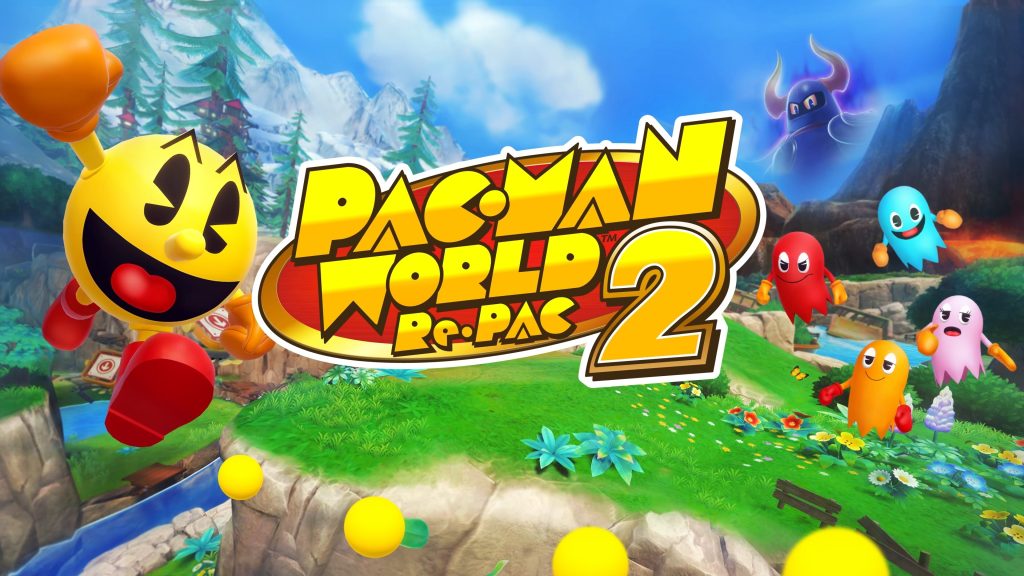
My experience playing Pac-Man World 2 Re-Pac was a fun if somewhat straightforward one. I traversed fairly simplistic worlds with familiar themes. From grasslands to forests to icy mountains, there wasn’t much that struck a chord with me, even as someone with fond memories of playing the original game on the GameCube. This distinct lack of anything tethering you to this experience goes beyond the lay of the land. Pac-Man faces enemies such as “frog” and “bear” rather than the kinds of distinct foes one expects to find in other games in the genre.
Realizing this about Pac-Man was admittedly somewhat haunting for me, as it got me thinking about the character’s long history in the industry. Pac-Man’s visual identity, his sound design, even his most notable enemies, are all born of that original arcade experience. Even his wife is so lacking in identity that the remakes have replaced her entirely with no material impact on the story.
Mario’s confidence and Sonic’s sass defined their characters even as far back as the late 80s and early 90s, respectively, but the guiding principles associated with these very identities permeated throughout the generations. Sonic’s musical stylings in his original run on the Genesis featured a sort of pop-hip-hop hybrid that spoke to an underlying rebelliousness in the character’s presentation. He offered a unique angle that couldn’t be found at the time, which offered a nearly seamless transition into the rock and roll Crush 40 era of the Blue Blur’s adventures. Mario’s fast-paced, almost amusement-park-like joy found in the likes of Super Mario World naturally fit still with the grand orchestral scores found in his spacebound adventures.
Try drawing a line from Pac-Man’s first arcade outing to his 3D platforming adventures, racing games, sequels and spinoffs, and you won’t find much of anything that feels uniquely tied to this character. What is the personality of a Pac-Man? Is it the silent protagonist of the olden days? The aged, cynical ghost hunter from his animated era? Or the quippy kid in the Ghostly Adventures? I’ve always been partial to the temperamental father from his point-and-click adventure.
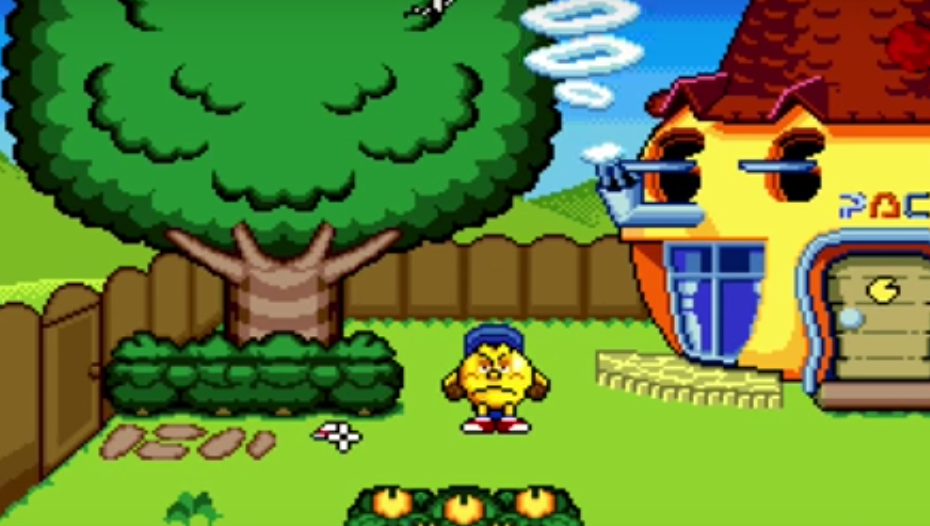
Pac-Man 2: The New Adventures is a game that I am wholly unable to separate from the character. Perhaps this is in part because it was my first experience with him, though I like to think it’s because the game offers something strikingly poignant in a package that is for all intents and purposes, painfully average.
For those unfamiliar, this collection of days in the life of Pac-Man was originally released in Japan as “Hello! Pac-Man” for the SNES and Sega Genesis. We in the US received a version of the game titled Pac-Man 2. What a daunting task, out the gate, to offer a sequel experience to a beloved arcade classic, let alone one that was such a massive departure from its supposed predecessor.
Rather than leading Pac-Man through a series of mazes, players are tasked with bringing him through the most complicated maze of all: everyday life. While ghost gobbling through Pac-Land is still a key element, Pac-Man spends the majority of this adventure putting food on the table for his family, confronting bullies on his son’s behalf, and running errands for his beloved wife.
Make no mistake, the wholesome tale underpinning this game is still rife with a healthy brand of cynicism. From attack-ready animals to infuriated food cart owners, Pac-Man’s adventure won’t be an easy one. Yet still, perhaps the greatest obstacle of all is the fickle player, balancing their yet undiscovered sadism with the flexibility the slingshot pointer offers them. The way the player interacts with the world can launch Pac-Man into some nightmarish scenarios. You can put your little orb-shaped friend through hang-gliding accidents, getting mauled by animals, assaulted by civilians, and more. All of this is delivered with a “playable cartoon” coat of paint, freeing players from the implications of their most questionable actions.
I provide this degree of background for this decades old Pac-Man spinoff, because I’m hoping that in doing so, I’m demonstrating that what this game actually offers is insight into the wasted Pac-tential still yet to be explored. “Sonic the Hedgehog” and “Super Mario” are names that represent something unique about that character. In a way, these titles communicate their ultimate power. The thing that they can leverage in the face of insurmountable odds can be determined from the outset. For Sonic, it is his unparalleled speeds that enable him to wage battle with his mechanized foes and persistent archenemy. For Mario, the mushrooms that grant him his super powers allow him all sorts of boons that adapt to the situations he’s confronted with. The term can almost be a catch-all for every power-up the red-clad plumber dons. So what is the strength of Pac-Man buried right in his name?
He’s just a guy! Pac-Man has a well of untapped potential rooted in the fact that he can actually provide an everyman point of view seldom seen in the heroic protagonists of older games. In Pac-Man 2: The New Adventures, the most compelling aspect of the game is watching the way Pac-Man interacts with the world around him. This isn’t dictated by systems or mechanics the way it often is in other classics. Pac-Man interacts with the world from the perspective of a person who inhabits it. He gets scared when he sees the dog next door because he knows his neighbor’s dog is scary. He knows to tiptoe beyond the farmer to the east of his home because he’ll be verbally accosted otherwise. He exists in a world and understands how to exist in that world. A character who thrives in that sort of status quo is unbelievably compelling in a world unfamiliar to him.
I realize this may seem like a bit much for a character who ultimately tends to appear in simple platformers and arcade remixes these days, but I can’t help but wonder if this very lack of identity is the reason Pac-Man has failed to have the storied history of blockbuster titles that defined every era he’s been privy to. I see a game like Shadow Labyrinth, which itself is a horror Metroidvania take on the character, and while I’m excited by the idea, I have to question whether or not the character being so malleable is the product of a failure to define who and what Pac-Man is.
I could begin to dig beneath the surface of Pac-Man 2: The New Adventures, and examine how the game celebrates its main character’s emotional honesty, willingness to face his fears, and has a number of other implicit lessons through its design. That said, I fear doing so would only push me further into mourning for the everyman stories Namco has yet to tell. Perhaps the Re-Pac games are an allusion to the path forward. Perhaps it is too much to ask that a nearly half-century old intellectual property strike out with big risks and bold swings. After all, embracing change is the greatest struggle the every man can experience. Here’s hoping that when he finally navigates that particular maze, Pac-Man becomes a household name for yet another generation.
 mustaphaprice